The fair games make more money.
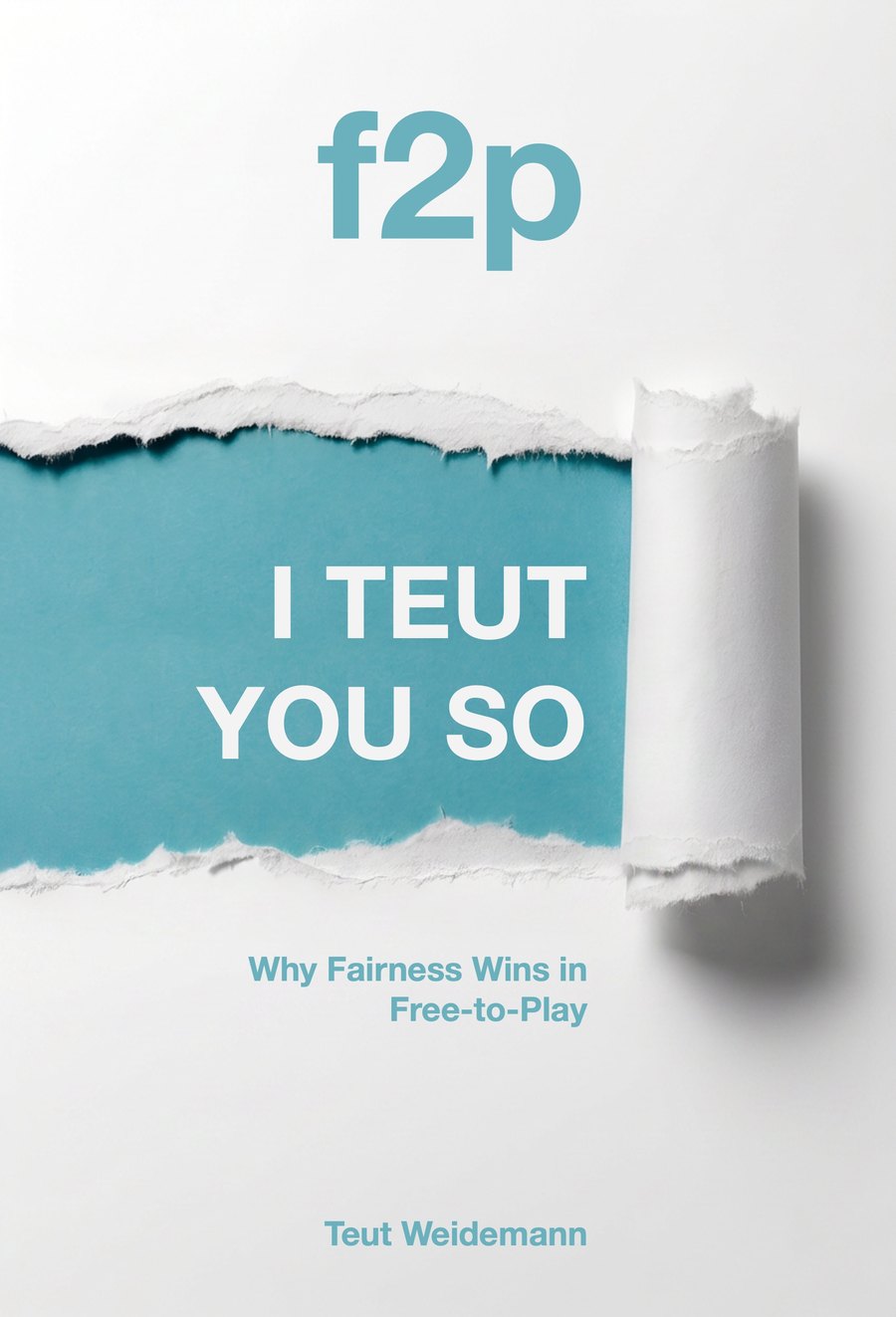
Forty years of making games, twenty of them as the man studios hire to argue against their own plan. Now written down.
 Where to buy ↓
In 2006, a man in Hong Kong told Teut Weidemann to give his games away and sell what was inside. He flew home with the idea and was laughed out of the room. Something that only works in China. Today it is more than half the games industry.
Inside: how to wire an economy so players still have something to want in month twelve. Why a discount is the fastest way to destroy everything you sell. What loot boxes were for a century before the scandal. And five chapters on the dissection table — King, League of Legends, World of Tanks, and the disruptors rewriting the charts now — opened up with their real numbers and the question that matters most: not what they sell, but what they refuse to sell.
The finding underneath all of it is not a moral argument. It is a commercial one.
- 10The Candy Empire — King at its height, and the missing Undo button
- 11The Ferrari with the Fiat Engine — League of Legends at $1.32 per user
- 12The Fair-Play War Machine — World of Tanks, and where the money really is
- 13The Disruptors — a population study from 2026
I lost the keys to my own blog
This domain pointed at a blog I could no longer edit. Rather than argue with it, I moved everything here — the book, the writing, and a poster you can take without paying for it.
Two pizzerias, one lesson about discounting
One ran half-price days. The other gave away a Coke. During the promotion the discount shop won — and after it, the discount shop collapsed.
The guilds that nearly got deleted
Guild members paid less per month than everyone else. The data was unambiguous. The recommendation that followed was catastrophic.